
How to Stop Your Grand Rapids Driveway or Patio from Chipping
What causes concrete to chip and how to protect your driveway or patio
Concrete is one of the most reliable materials for driveways, patios, and walkways. It's strong and low-maintenance, but Michigan winters put it through a lot. Freezing temperatures, moisture, repeated freeze-thaw cycles, and deicing salt all wear down the surface over time and lead to chipping, flaking, or scaling.
The good news: most chipping is preventable. Here's what actually protects your concrete in Grand Rapids' climate.
1. Start with What's Underneath
A durable slab starts before any concrete is poured. The soil beneath it needs proper preparation and compaction, often with an aggregate base for stability and drainage. In Grand Rapids, where the ground shifts with seasonal freezing and thawing, skipping this step leaves concrete vulnerable to settling and cracking later. When you're getting a new driveway or patio quoted, ask about the groundwork, not just the finish.
2. Choose a Mix Built for Freeze-Thaw Weather
Water that gets into concrete expands when it freezes, and that stress adds up over repeated cycles. For outdoor concrete in Michigan, contractors typically use air-entrained concrete, which contains tiny air pockets that give freezing water room to expand without damaging the surface. A good contractor selects the mix based on where the concrete will sit and how it will be used.
3. Let New Concrete Cure Properly
Fresh concrete needs time to build strength, and cold weather makes that process more sensitive. If new concrete freezes before it's cured, the surface won't develop the durability it needs. Follow your contractor's timeline for when you can walk, park, or apply anything to a new slab. Using it too soon is one of the most common causes of early damage.
4. Keep Water Moving, Not Pooling
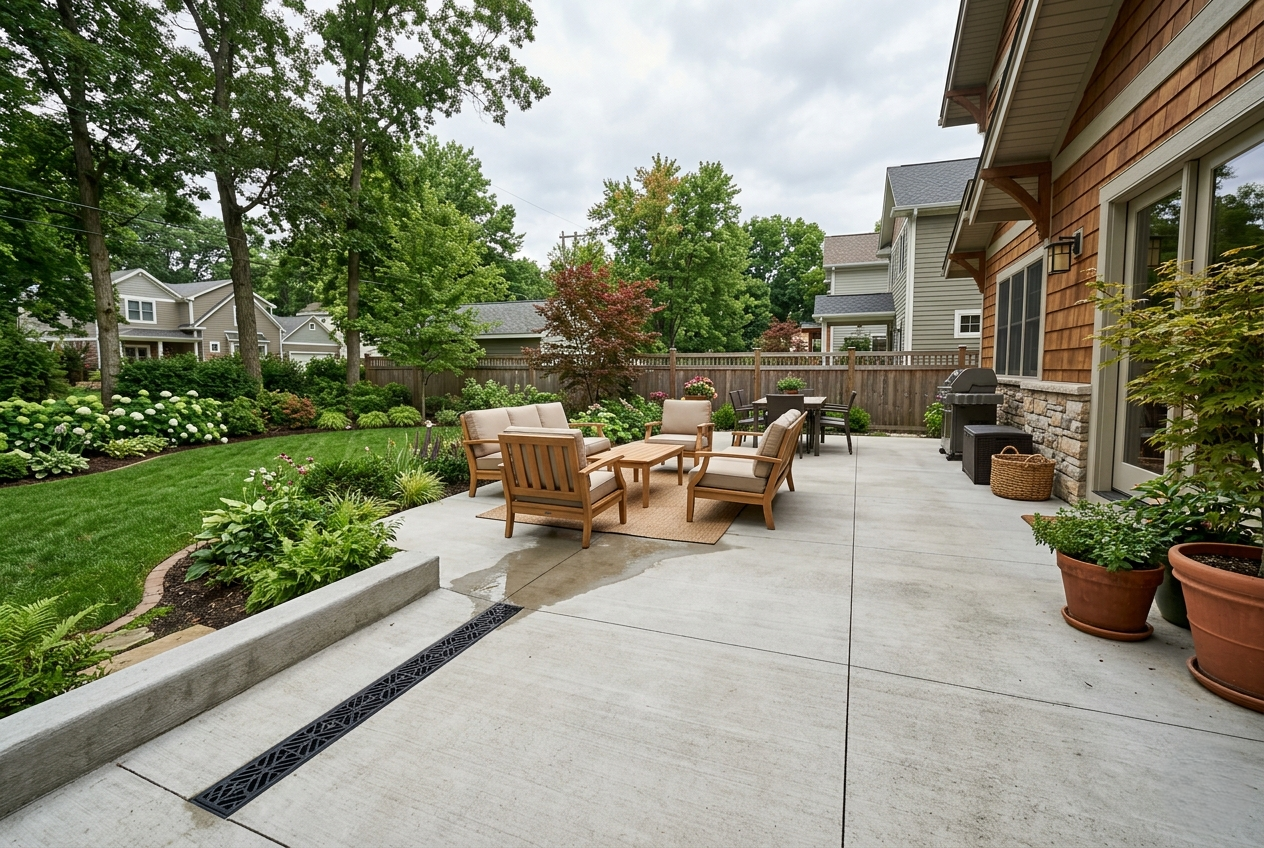
Standing water that repeatedly freezes on or near concrete is one of the biggest causes of surface damage. Check your driveway, patio, and walkways after rain or snowmelt for puddles that keep forming in the same spot. Also check where your downspouts drain. If water lands right next to a walkway, that section stays wetter than the rest and deteriorates faster. Fixing grading and drainage issues is one of the simplest ways to protect concrete long-term.
5. Be Careful with Deicers
Deicing salts help with safety but can damage concrete, especially on newer or already-weakened surfaces. Use only as much as the product instructions call for, and consider sand for traction instead. New concrete needs extra care during its first winter, so check what's safe for your specific surface before applying anything.
6. Seal It at the Right Time
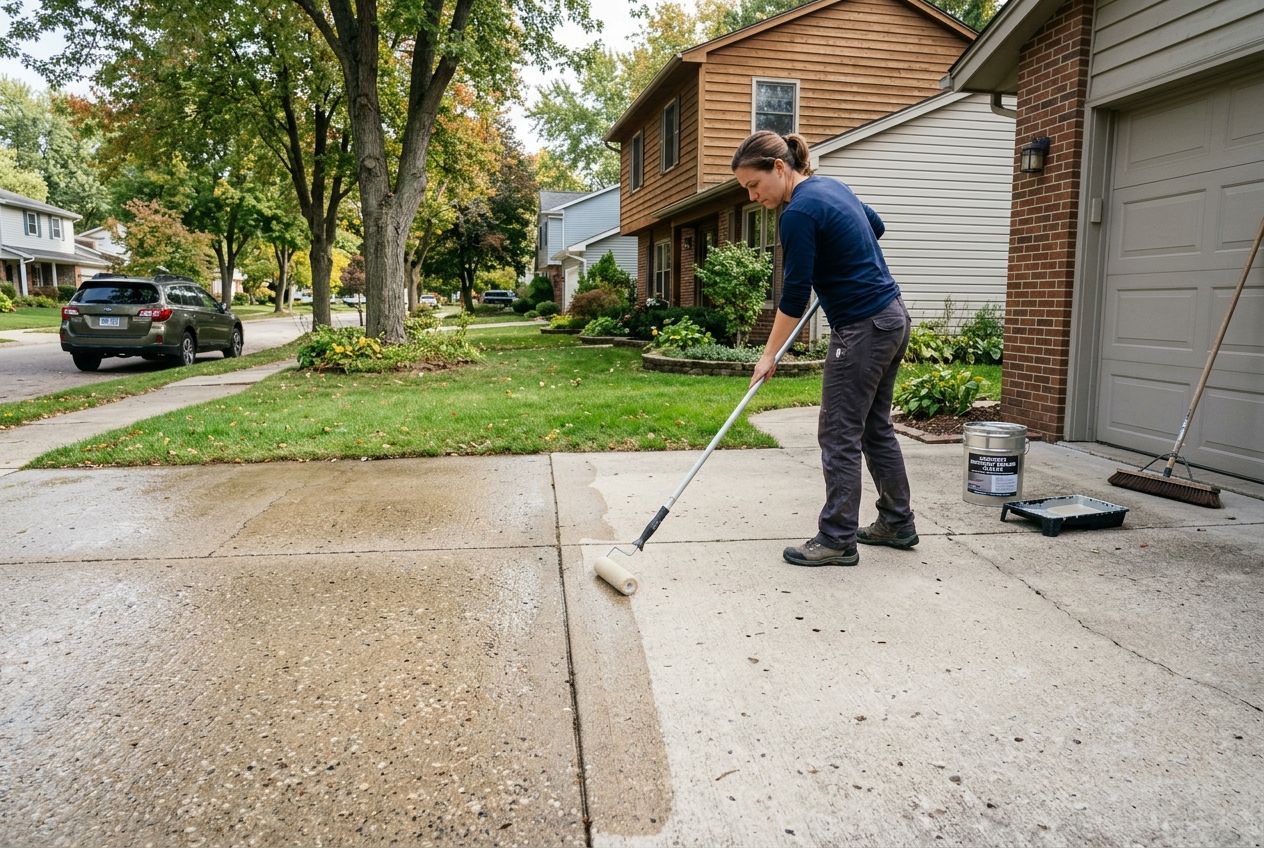
Concrete is porous, and a proper sealer reduces how much water and deicing chemicals soak in. This matters most for surfaces exposed to Michigan winters. New concrete needs to cure fully before sealing, and sealers vary in how they're applied, so follow the manufacturer's guidance or use a professional. Sealer won't fix concrete that's already badly chipped. If damage is extensive, find the cause first.
7. Clear Snow Without Scraping Damage In
Aggressive scraping can gouge concrete that already has cracks or chips. Use tools suited to your surface, and skip heavy equipment on a typical residential driveway. The goal is clearing snow safely, not adding stress to the slab.
8. Catch Small Damage Early
A small chip or rough patch is easy to ignore, but keep an eye on it. Watch for flaking, scaling, cracks near chipped spots, exposed aggregate, or damage that keeps spreading. Catching problems early usually means a simpler fix.
9. Do a Fall Inspection
Before winter hits, walk your property and check your concrete for cracks, chips, and drainage problems. Confirm your gutters and downspouts are directing water away from the slab. A short inspection now can save you a bigger repair in spring.
10. Get It Installed Right the First Time
The best way to prevent chipping is a solid installation from day one, covering site prep, drainage, mix selection, finishing, and curing. An experienced local contractor understands what Grand Rapids winters demand and builds for it.
Repair or Replace?
Small, isolated chips can often be repaired. Wider scaling may need resurfacing. If you're dealing with deep cracks, significant settling, or structural damage, replacement is usually the better long-term choice. Covering damage without fixing the cause rarely holds.
If your concrete is already showing wear, Grand Rapids Concrete Pros can assess it and help you decide the right next step.
Contact us to discuss your project.
You might also like
Grand Rapids Concrete Pros Blog