
How to Prevent Winter Snow and Ice Damage to Your Concrete in Grand Rapids
What you can do to prevent snow and ice from damaging your concrete
Grand Rapids winters do not simply drop snow and move on. Lake-effect storms roll in off Lake Michigan, temperatures climb above freezing for an afternoon, then fall again overnight. That back and forth wears down driveways, front steps, sidewalks, and patios across the city. The snow sitting on top is rarely the problem.
Here is how to protect it.
The Freeze-Thaw Cycle Does the Real Damage
Although concrete appears strong and solid, its surface contains tiny pores and fine hairline cracks that can develop over time. Water works its way in. When it freezes, it expands and pushes outward from the inside. As the ice melts, water seeps farther into the surface, creating space for more moisture to collect before the next freeze.
Let that process happen repeatedly over the winter, and it can lead to:
- Cracks that widen and run deeper
- Flaking and peeling on the surface, known as spalling
- Crumbling corners and edges
- Damage along control joints
- Sections that settle unevenly
Older concrete and any surface with existing cracks are the most vulnerable. Winter rarely creates a problem from nothing. It takes a small one and makes it expensive.
Seal It Before the First Hard Freeze
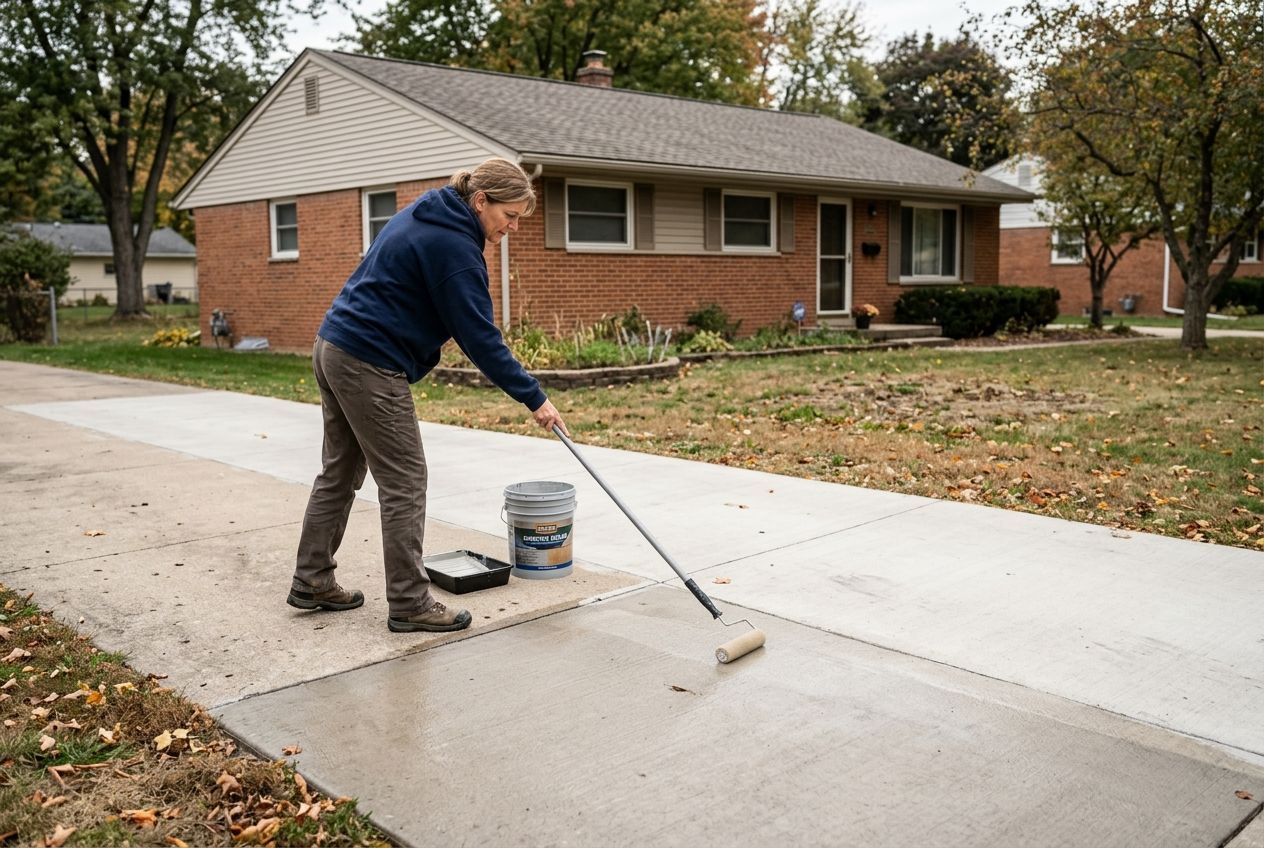
A quality concrete sealer reduces how much moisture soaks in, which takes the fuel out of the freeze-thaw cycle.
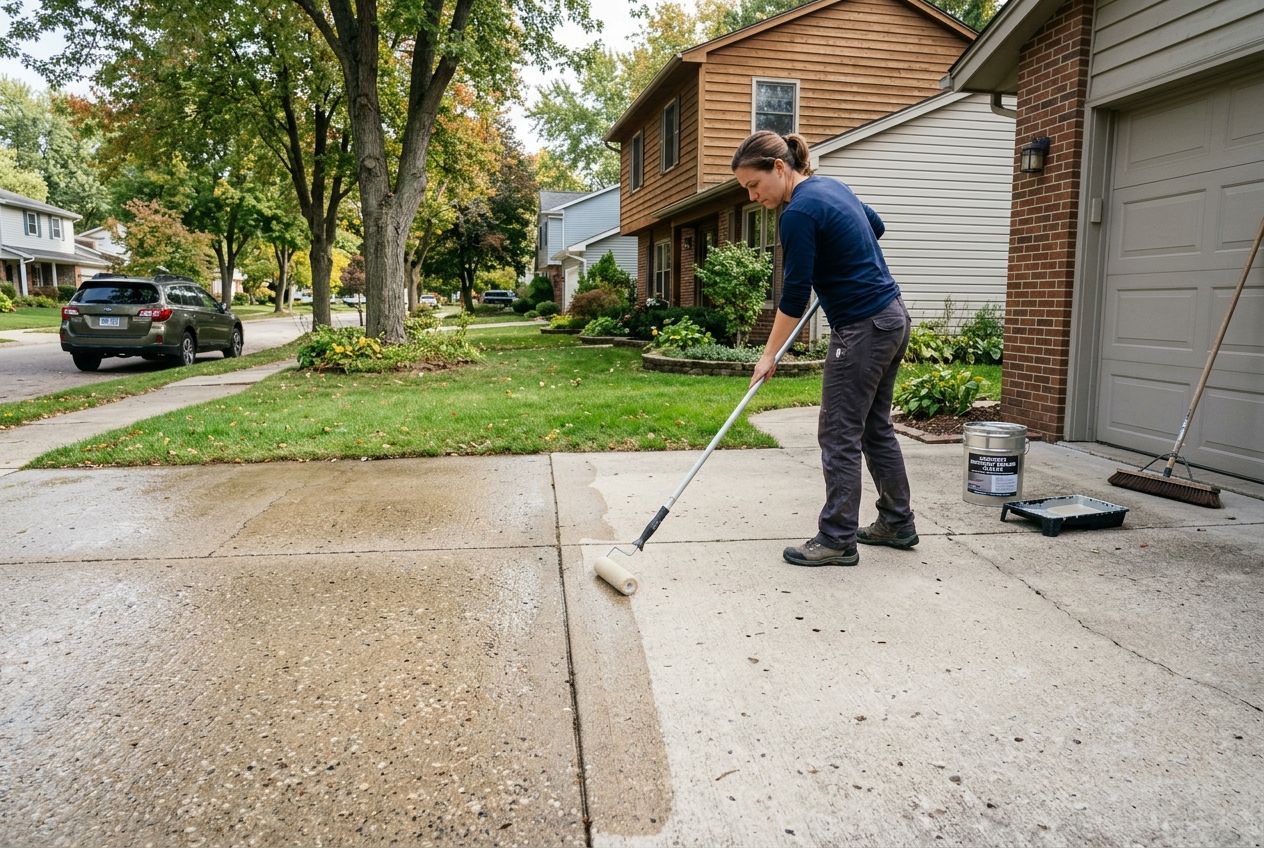
Two things matter: condition and timing. Sealing over a crack traps the problem instead of fixing it, so repairs come first. Sealer also needs dry concrete and mild temperatures to cure, so plan for early fall rather than the weekend before a storm. Follow the temperature window on the label.
Shovel Early and Shovel Gently
Clearing snow before it packs down stops it becoming a sheet of ice you have to chip away later. How you clear it matters as much as when.
- Use a plastic or rubber-edged shovel. Metal blades chip the surface and catch on raised sections.
- Never chop at thick ice with a shovel edge or a pick. If the concrete underneath is already weak, you will break it.
- With a snow blower or plow, set the blade height so it is not riding on the concrete.
Don’t Overuse Deicer on Your Concrete Surfaces
Deicers make walkways safer, but they are easy to overdo. Spread only what the label calls for, and only where people walk. Covering a whole driveway wastes product and puts more meltwater into the surface.
- Rock salt works poorly below the mid-teens, so people apply more of it on the coldest days, when it does the least good.
- Deicer repairs nothing. On concrete that is already spalling, it speeds the damage up.
- Sand and traction grit add grip with no chemistry involved, and are often the better choice on steps and short walks.
- Concrete poured within the past year is especially sensitive, so ask your contractor before applying anything.
Make Sure Meltwater Has Somewhere to Drain
Each thaw sends melting water toward the areas where it can drain away. If it pools on your driveway or against your front steps, it soaks in and refreezes in the same spot night after night.
Walk your property during a rain and note where water collects. Pay attention to downspouts. One emptying onto a driveway keeps that patch wet and icy all season. Direct the water toward the lawn instead, and keep your gutters clear to prevent overflow from pooling on the concrete. If the same low spot puddles every time, you have a grading issue. No amount of sealer will fix that.
Repair Cracks Now, Not in March
A crack you can barely see in October is an open channel for water in January.
Walk your driveway, garage approach, front steps, sidewalk, patio, and walkways. Look for cracks, chipped edges, flaking, and loose pieces. Hairline surface cracks often need nothing more than a patch product. Wide cracks, heavy spalling, or slabs that have shifted need professional repair. Handling it before the ground freezes gives you more options and a smaller bill.
Check Again in Spring
When the snow clears, walk the same route and compare. New cracks, crumbling corners, peeling surfaces, loose joints, and settled sections all point to winter damage. Finding it in April leaves a full season to fix it.
Get Ready Before the Snow Arrives
Grand Rapids concrete takes months of freezing, thawing, and salt every year. You cannot change the weather, but sealing, careful shovelling, restrained deicing, good drainage, and early repairs all make a difference.
If your driveway, sidewalk, patio, or steps are showing wear, Grand Rapids Concrete Pros can assess the surface and tell you what needs doing.
Contact us before winter sets in.
You might also like
Grand Rapids Concrete Pros Blog